The 5-3-2 Content Rule for Instagram: A Proven Formula for Engagement
Why Your Instagram Feed Needs a Content Strategy: The 5-3-2 Rule Unpacked
Ever scroll through Instagram and feel like you’re bombarded with ads, only to see a dry tutorial next? It’s a common frustration. Many brands struggle to maintain consistent engagement because their content is all over the place. A random posting strategy, jumping from a hard sell to a fleeting thought, simply doesn’t build a connection. Your audience craves predictability and value. Without a clear plan, you risk alienating followers who are looking for more than just a sales pitch.
> Struggling with Instagram engagement? The 5-3-2 content rule provides a clear, actionable framework to balance value and promotion, ensuring your audience stays engaged and receptive. It’s the secret to a sustainable, growth-focused Instagram presence.
The digital landscape, especially Instagram, is crowded. To cut through the noise, you need a deliberate approach. A content strategy isn’t just a nice-to-have; it’s essential for sustainable growth. It ensures every post serves a purpose, whether it’s to educate, entertain, or eventually, to sell. A well-defined strategy helps you build a loyal community that trusts your brand and looks forward to your content. Without it, your Instagram presence can feel erratic, leading to declining reach and engagement. So what’s the fix? A solid content rule.
Decoding the 5-3-2 Content Rule: What Each Number Means
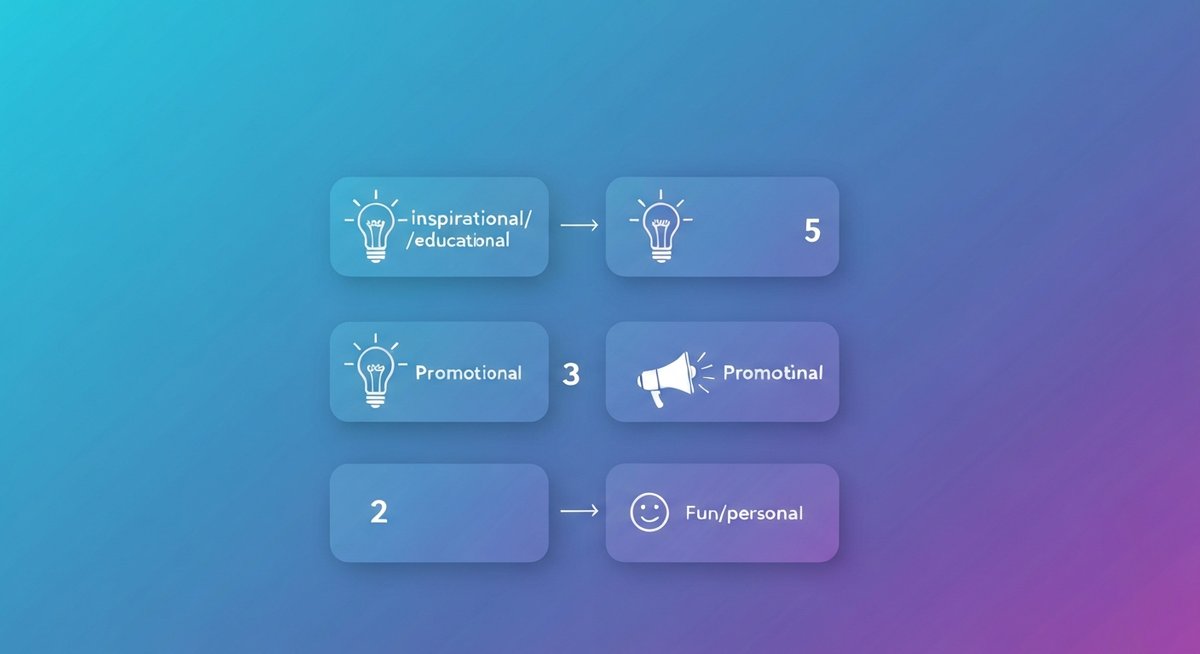
The 5-3-2 content rule is a straightforward guideline for structuring your Instagram posts. For every 10 posts you publish, the recommendation is to dedicate 5 to educational content, 3 to engaging content, and 2 to promotional content. This ratio is designed to create a balanced feed that consistently delivers value, fosters interaction, and gently guides followers toward your offerings without being overly pushy. It’s a framework that prioritizes your audience’s needs before asking for their business.
> The 5-3-2 content rule is simple: for every 10 posts, aim for 5 educational pieces that teach your audience something, 3 engaging pieces that spark interaction, and 2 promotional pieces that highlight your offerings. This ratio is key to a balanced Instagram content strategy.
Let’s break down what each number signifies:
- The “5”: Educational Content. This is about sharing knowledge, insights, and practical advice that helps your audience. Think tutorials, how-tos, industry tips, or answering frequently asked questions. The goal is to position yourself as an authority and a valuable resource.
- The “3”: Engaging Content. This category focuses on sparking conversation and building community. It includes interactive elements like polls, Q&As, behind-the-scenes glimpses, user-generated content features, or thought-provoking questions. The aim is to get your audience talking and feeling connected to your brand.
- The “2”: Promotional Content. These are the posts where you directly talk about your products or services. This could be announcing a sale, highlighting a new feature, showcasing a customer testimonial related to a specific offering, or inviting sign-ups for a webinar. The key here is to make these posts feel relevant and valuable, not just like an advertisement.
This content ratio is crucial because it adheres to the principle of giving before asking. By consistently providing valuable educational and engaging content, you build trust and rapport. This solid foundation makes your followers more receptive when you do introduce promotional content. It’s a sustainable approach that fosters long-term audience loyalty and drives conversions naturally.
[LINK:instagram-content-strategy]
The Power of 5: Crafting Educational Content That Captivates
Educational content forms the backbone of a strong Instagram presence. It’s your primary vehicle for demonstrating expertise and delivering tangible value to your followers. When you consistently share useful information, you establish your brand as a go-to resource, fostering trust and authority. Think about what problems your audience faces or what questions they frequently ask. Answering these with well-crafted educational posts positions you as someone who understands their needs.
> Educational content is your primary tool for establishing authority and providing genuine value. Focus on sharing tips, tutorials, industry insights, and answers to common questions to make your audience smarter and more connected to your brand.
The beauty of educational content lies in its versatility. You can leverage various formats to keep things fresh and engaging. Carousels are excellent for step-by-step tutorials or breaking down complex topics into digestible slides. Short video tutorials can demonstrate practical applications of your knowledge. Infographics are perfect for presenting data or complex processes visually. You can also create “myth-buster” posts to debunk common misconceptions in your industry. For example, a fitness coach might create a carousel post titled “5 Common Squat Mistakes and How to Fix Them,” complete with visual demonstrations. A financial advisor could share an infographic on “Key Differences Between a 401k and an IRA.”
The benefits of prioritizing educational content are significant. It drives saves, which is a strong signal to Instagram’s algorithm that your content is valuable. It also increases shares as people naturally want to pass along useful information to their networks. One study by Social Media Examiner found that 72% of marketers use content marketing to build brand loyalty, and educational content is a cornerstone of effective content marketing. By focusing on teaching and informing, you build a deeper connection with your audience that goes beyond a transactional relationship. It’s about empowering your followers with knowledge, making them more likely to turn to you when they’re ready to make a purchase.
[LINK:5-types-of-educational-instagram-content]
The Magic of 3: Engaging Your Audience Authentically
If educational content builds authority, engaging content builds community. This is where you invite your audience to participate, share their thoughts, and feel like a part of something. It’s the human element that transforms a passive audience into an active community. When followers feel seen and heard, their loyalty to your brand deepens considerably. This interactive layer is crucial for creating a vibrant and connected following that genuinely cares about your brand.
> Engaging content is what sparks conversation and builds community. Think polls, Q&As, behind-the-scenes glimpses, and user-generated content features to foster interaction and make your followers feel seen and heard.
There are numerous ways to inject engagement into your Instagram feed. A simple yet effective tactic is to ask questions in your captions. Instead of just stating a fact, pose a question that prompts followers to share their experiences or opinions. For instance, a baker might post a picture of a new cake flavor and ask, “What’s your favorite cake flavor for a summer celebration?” Interactive Stories features are goldmines for engagement. Use polls to gauge preferences, question boxes to solicit feedback or topics for future content, and quiz stickers to test their knowledge or spark curiosity. Running contests or giveaways where users have to comment or share to enter is another powerful engagement driver. Showcasing user-generated content, where you repost content created by your followers featuring your products or services, makes them feel valued and encourages more participation. A common mistake is neglecting these interactive Stories features, missing out on easy wins for audience connection.
The impact of consistent engagement is measurable. It directly boosts comments and shares, two key metrics that signal to the algorithm that your content resonates. A more engaged audience is also more likely to become loyal customers. When you foster a sense of community, you create advocates for your brand who are invested in your success. This authentic interaction builds a powerful connection that goes beyond simple likes.
[LINK:3-ways-to-create-engaging-instagram-content]
The Necessity of 2: Promotional Content That Converts
While the focus should be on providing value, promotional content is essential for driving business objectives. The key to the “2” in the 5-3-2 rule is making these posts feel like a natural extension of the value you offer, not an abrupt interruption. When done correctly, promotional content is highly effective because it targets an audience that has already been nurtured and trusts your brand. It’s about presenting your offerings as solutions to problems you’ve implicitly or explicitly addressed in your educational and engaging content.
> Your promotional content should be sparse, high-value, and clearly address an audience need. When done right, it feels like a natural solution rather than an interruption, maximizing conversion potential.
The goal is to make your promotional posts compelling and relevant. Instead of just listing features, focus on the benefits and how your product or service solves a specific pain point for your audience. For example, instead of saying “Our software has X feature,” try “Struggling with [audience pain point]? Our software’s X feature helps you achieve [desired outcome] effortlessly.” Highlighting special offers, discounts, or new product launches can be effective, but always frame them in terms of the value they provide to the customer. A clear call-to-action is crucial; tell people exactly what you want them to do next, whether it’s “Shop now,” “Learn more,” or “Sign up today.” Avoid overly salesy language; instead, focus on the problem your product solves for the customer. For a service-based business, this might be a post showcasing a client success story that subtly highlights the service provided. For a product-based business, it could be a visually appealing post demonstrating a product in use, emphasizing its ease or effectiveness. The timing and relevance of these posts also matter significantly.
When your promotional content is well-integrated into a strategy that prioritizes value, it converts more effectively. Followers who have come to trust your expertise are more inclined to consider your offerings when they are presented as solutions to needs they’ve come to recognize. This approach respects your audience’s journey and builds a more sustainable customer base.
[LINK:2-effective-promotional-instagram-post-ideas]
Putting the 5-3-2 Rule into Practice: Content Planning & Calendars
The 5-3-2 rule isn’t just theory; it’s a practical framework that comes alive with effective planning. The most efficient way to implement this ratio consistently is by using a social media calendar. This tool acts as your roadmap, allowing you to map out your posts in advance and ensure you’re hitting the right balance of educational, engaging, and promotional content. By planning ahead, you avoid the last-minute scramble that often leads to an unbalanced or inconsistent feed.
> Implementing the 5-3-2 rule is most effective when integrated into your content planning. Utilize a social media calendar to schedule posts strategically, ensuring you maintain the correct ratio and consistency.
Here’s how to put it into practice:
- Choose Your Calendar Tool: Select a calendar that works for you. This could be a simple spreadsheet, a dedicated planner, or a digital tool like Hootsuite, Later, or Buffer. Many of these offer visual planning capabilities.
- Map Out Your Month: At the beginning of each month (or week, depending on your preference), block out your posts according to the 5-3-2 ratio. If you plan to post 10 times this week, mentally or physically assign 5 slots for educational, 3 for engaging, and 2 for promotional content.
- Brainstorm Content Ideas: For each category, brainstorm specific post ideas. For educational, think of a tutorial topic or a common question. For engaging, consider a poll idea or a “this or that” scenario. For promotional, identify a product or service you want to highlight.
- Batch Content Creation: Once you have your ideas, try to create content in batches. Dedicate a specific day or block of time to film videos, design graphics, or write captions for multiple posts. This significantly increases efficiency. For example, you might spend a morning filming three short educational Reels and an afternoon designing graphics for a carousel.
- Schedule Your Posts: Use your chosen scheduling tool to upload and schedule your content. This ensures a consistent posting schedule, even when you’re busy. Many tools allow you to preview your feed to see how the content looks together.
- Review and Adjust: Regularly review your calendar and your analytics. Did you stick to the ratio? How did certain types of content perform? Use this information to refine your planning for the next cycle.
By adopting a structured approach with a content calendar, you transform the 5-3-2 rule from an abstract concept into a concrete strategy that drives predictable engagement and growth on Instagram.
[LINK:social-media-content-calendar]
Adapting the 5-3-2 Rule for Different Instagram Goals
The 5-3-2 content rule serves as an excellent starting point, but it’s not a one-size-fits-all prescription. Its real power lies in its adaptability. You can, and should, tweak this ratio to align with your specific business objectives and current marketing campaigns. For instance, a brand that’s just launching might lean more heavily on educational content to build awareness and establish credibility before introducing many promotional posts. Conversely, during a product launch or a major sale period, you might temporarily adjust the ratio to include slightly more promotional content to capitalize on the momentum.
Consider these scenarios:
- Brand Awareness Focus: If your primary goal is to get your brand in front of a new audience, you might increase the proportion of educational and engaging content. For example, a new B2C product company might run a series of “how-to” Reels (educational) and interactive polls about user preferences (engaging), pushing promotional posts to the minimum of 2 while they build recognition.
- Lead Generation Focus: For businesses aiming to capture leads, you might slightly shift the balance. While still providing value, your educational content could subtly introduce lead magnets (e.g., a downloadable guide that requires an email signup), and your promotional content might directly advertise workshops or consultations. A B2B service provider might focus on thought leadership pieces (educational) that lead to webinar sign-ups (promotional).
- Community Growth Focus: If your main aim is to build a highly engaged community, you’ll want to double down on interactive content. This could mean increasing the “engaging” portion from 3 to 4 posts and ensuring each engagement post has a clear call for comments or shares. A niche hobby brand might focus on user-submitted photos and Q&A sessions.
- Product-Based vs. Service-Based: A product-based business might find success with visually appealing educational content showcasing product usage, while a service-based business might thrive on sharing client testimonials and case studies (educational/promotional hybrid).
The core principle remains: nurture your audience with value before asking for their business. By understanding your current goals, you can make informed adjustments to the 5-3-2 ratio, ensuring your Instagram strategy is not only balanced but also maximally effective for your unique situation.
Measuring Success: Tracking Your 5-3-2 Content Performance
You’ve implemented the 5-3-2 rule, but is it actually working? The only way to know for sure is by diving into your Instagram analytics. Don’t operate on assumptions; let the data guide your strategy. Instagram Insights, accessible to business and creator accounts, provides a wealth of information about how your content is performing across all three categories. Understanding these metrics will help you refine your approach and optimize for better results.
> Don’t guess if the 5-3-2 rule is working; measure it! Analyze your Instagram analytics to see how educational, engaging, and promotional posts are performing in terms of reach, engagement, saves, and conversions.
Here’s what to track for each content type:
- Educational Content:
- Saves: A high number of saves indicates your content is valuable and people want to refer back to it. This is a key indicator of strong educational value.
- Reach: How many unique accounts saw your post? This shows your educational content is resonating enough to be shared or discovered.
- Comments/Shares: While engagement is key for all posts, seeing comments and shares on educational content means you’re sparking conversation and extending its reach.
- Engaging Content:
- Engagement Rate: This is crucial. Look at the percentage of people who interacted with your post (likes, comments, shares, saves) relative to its reach.
- Comments: This is the primary metric for engagement. Are people actively participating in the conversation?
- Shares: When followers share your engaging content, it amplifies your community-building efforts.
- Story Interactions: For Stories, track poll responses, question box submissions, quiz completions, and sticker taps.
- Promotional Content:
- Website Clicks: If your goal is traffic, track how many people click through to your website or landing page from these posts.
- Conversion Rates: This is the ultimate metric for promotional success. How many people who saw your promotional post actually took the desired action (e.g., made a purchase, signed up)?
- Reach/Impressions: Even for promotional content, understanding how widely it’s being seen is important.
By consistently reviewing these metrics and comparing them across your different content categories, you can identify what’s working best. Perhaps your carousels for educational content are getting far more saves than single image posts. Maybe your Q&A Stories are driving more overall engagement than polls. This data-driven approach allows you to iterate on your strategy, double down on successful tactics, and make sure your 5-3-2 rule is not just a guideline, but a driver of tangible results.
[LINK:instagram-analytics-guide]
Common Pitfalls to Avoid with the 5-3-2 Content Rule
While the 5-3-2 rule is powerful, it’s easy to stumble if you’re not mindful. The most frequent misstep is miscategorizing content. For instance, you might label a post detailing a minor product feature as “educational” when its primary intent is to highlight a selling point. Similarly, a simple announcement like “We’re open today!” might be mistakenly categorized as “engaging” when it offers little for the audience to interact with. Being honest about the primary intent of each post is critical for truly leveraging the framework.
> The most common mistake is miscategorizing content: mistaking a product feature as educational or a simple announcement as engaging. Be honest about the primary intent of each post to truly leverage the 5-3-2 framework.
Here are other common pitfalls to watch out for:
- Over-Prioritizing Promotion: Even with the “2” posts, it’s easy to let them creep into 3 or 4, especially if you’re feeling sales pressure. This can quickly alienate your audience, who followed you for value, not constant ads.
- Neglecting Engagement: The “3” engaging posts are crucial for building community. If these are weak, generic, or non-existent, your audience won’t feel connected. They might see your content, but they won’t participate.
- Generic Value: Educational content must be genuinely helpful. A post that’s just a rehashing of obvious information won’t build authority. It needs to offer a unique perspective, a practical tip, or a solution to a real problem.
- Ignoring Audience Feedback: If your engaging content isn’t sparking conversation or your educational content isn’t being saved, pay attention. Your audience is telling you what they want more or less of.
- Not Adapting: While 5-3-2 is a strong baseline, rigidly adhering to it without considering your current goals or audience response can be counterproductive. Be flexible.
By being aware of these common traps, you can navigate the 5-3-2 rule more effectively, ensuring your Instagram strategy remains balanced, valuable, and conducive to growth.
Is the 5-3-2 Rule Still Relevant for Instagram in [Current Year]?
Absolutely, the 5-3-2 rule remains highly relevant for Instagram in [Current Year]. Its core principle—balancing audience value with promotional efforts—is timeless. While Instagram constantly evolves with new features like Reels, Stories, and advanced shopping capabilities, the fundamental human psychology of consumption hasn’t changed. People still want to learn, be entertained, and feel connected before they are ready to buy.
> Yes, the 5-3-2 rule remains highly relevant because its core principle—balancing value with promotion—is evergreen. While Instagram evolves, the fundamental human need for useful and entertaining content before being sold to persists.
Consider how algorithm changes often prioritize content that keeps users engaged on the platform. Educational content that gets saved, and engaging content that sparks comments and shares, naturally aligns with this. Even promotional content, when it solves a problem or offers a clear benefit, can be seen as valuable by the right audience. The rule provides a structure that inherently encourages the creation of the kinds of posts Instagram’s algorithm is designed to favor.
Furthermore, the emphasis on community building through engaging content is more critical than ever. In a noisy digital world, authentic connection is a significant differentiator. The 5-3-2 rule provides a framework that helps brands cultivate that connection. While the specific formats you use for each category might change (e.g., leaning into Reels for educational content), the underlying strategy of providing value first, then inviting interaction, and finally promoting offerings, remains a robust and effective approach for sustainable growth on Instagram.
Frequently Asked Questions
Q: What is the 5-3-2 content rule?
A: It’s a content ratio for social media, suggesting 5 educational posts, 3 engaging posts, and 2 promotional posts out of every 10.
Q: How to use the 5-3-2 rule on Instagram?
A: Plan your content calendar with this ratio in mind, ensuring a mix that prioritizes value before sales.
Q: What are the 5-3-2 rule examples?
A: Educational: tutorial, tip; Engaging: poll, Q&A; Promotional: discount, product launch.
Q: Is the 5-3-2 rule still relevant for social media?
A: Yes, its emphasis on audience value and balanced promotion remains a timeless strategy.
Q: What is the best content mix for Instagram?
A: The 5-3-2 ratio is widely considered an effective and balanced content mix for consistent engagement.
Q: How often should I post on Instagram?
A: Posting frequency varies, but adhering to the 5-3-2 ratio is more important than the exact number of posts per day or week.